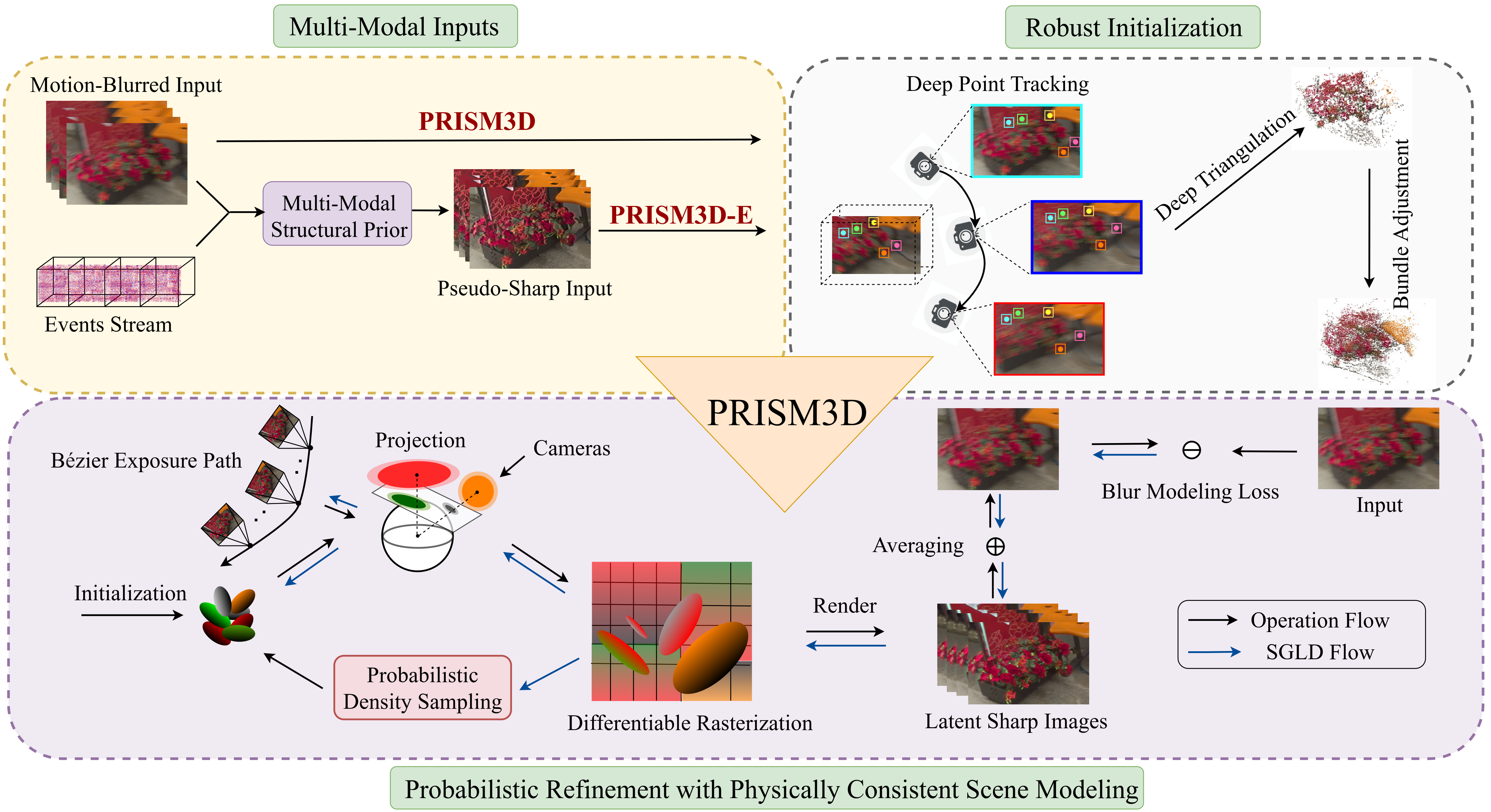
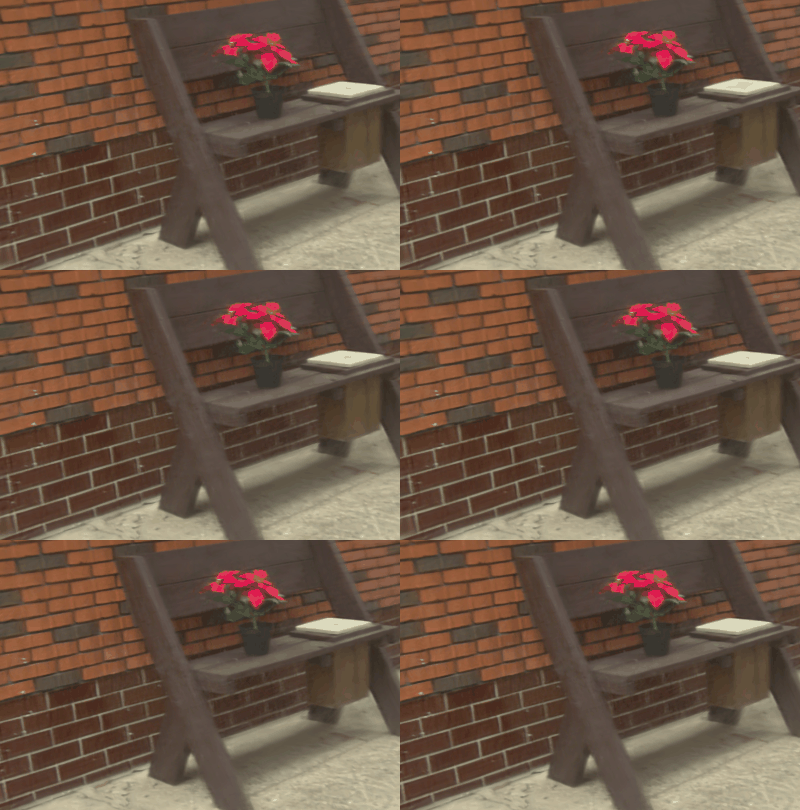
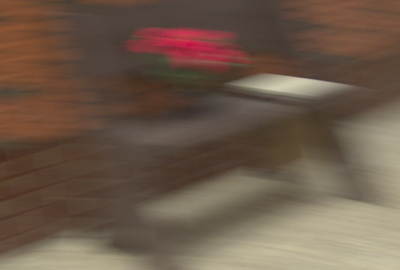
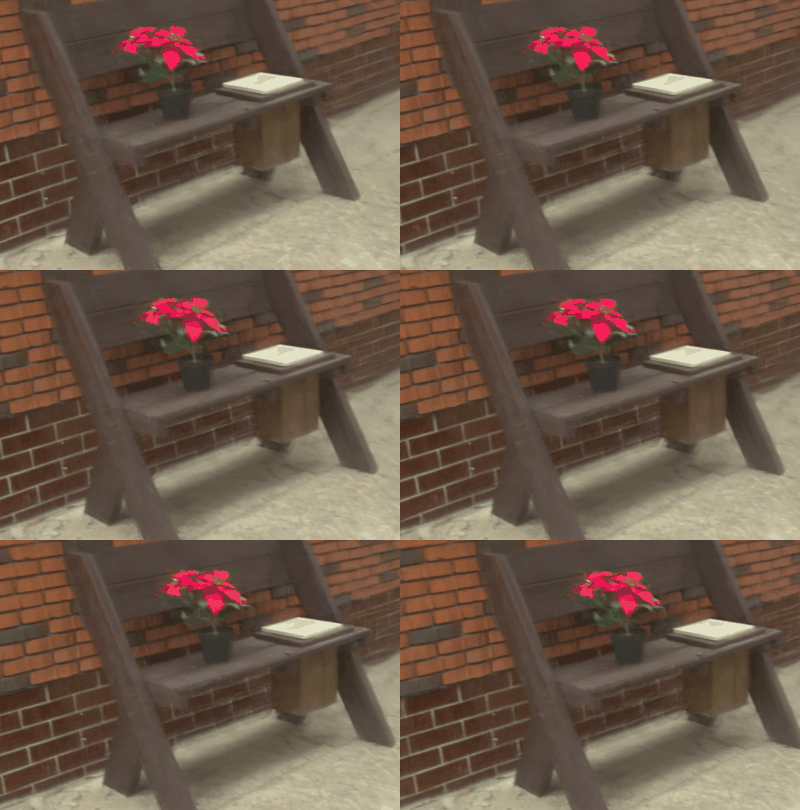
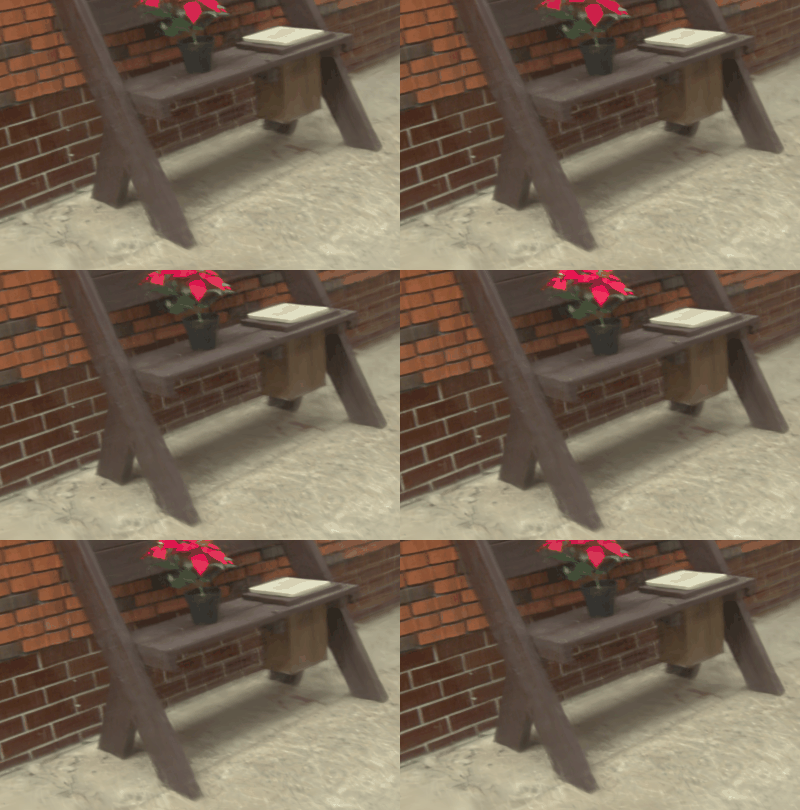
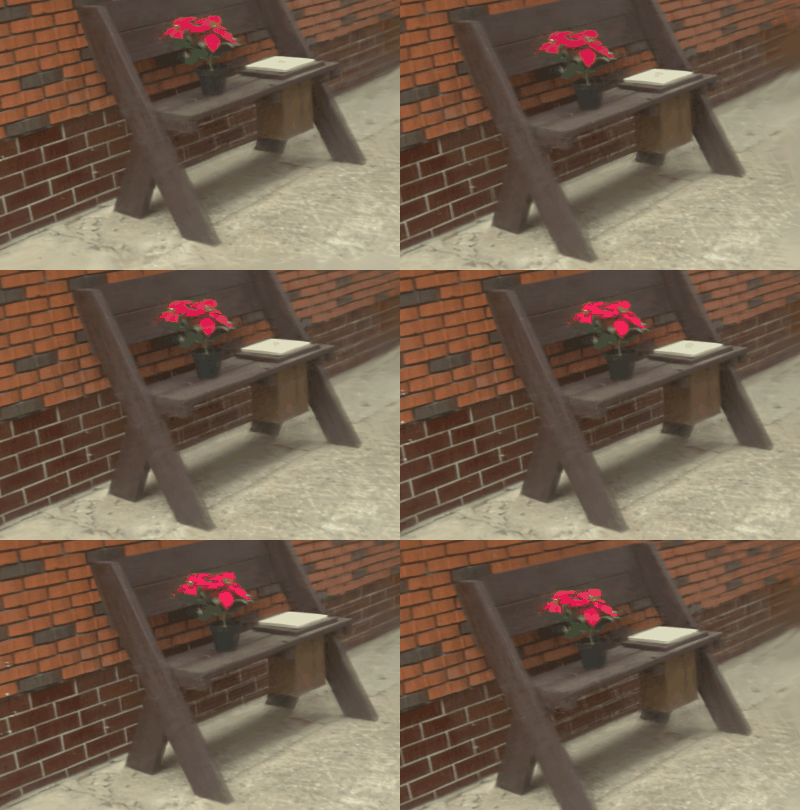
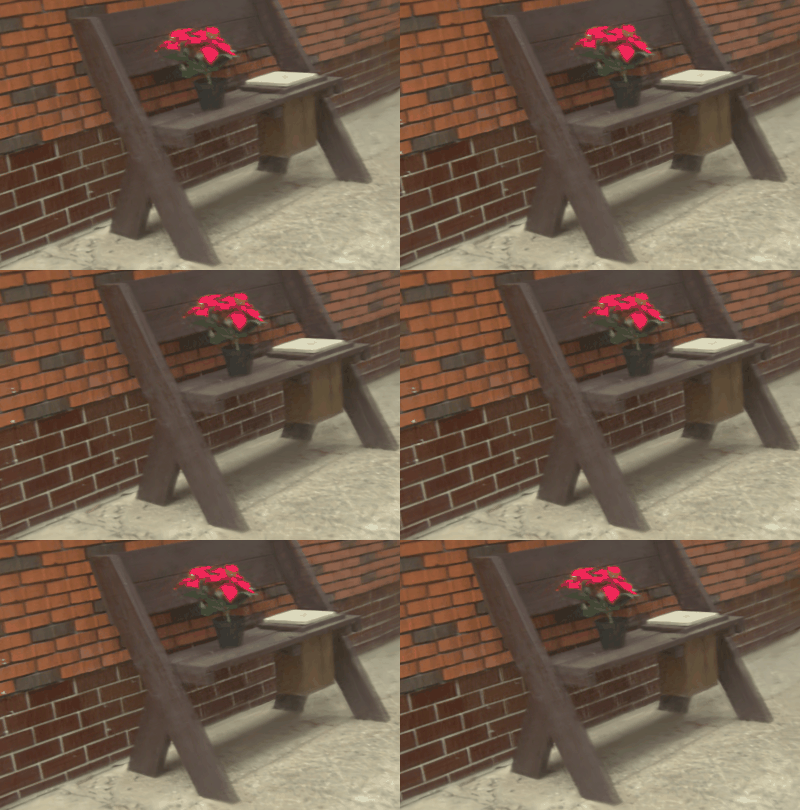
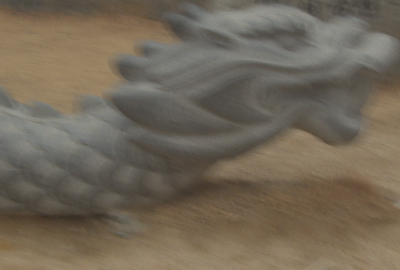
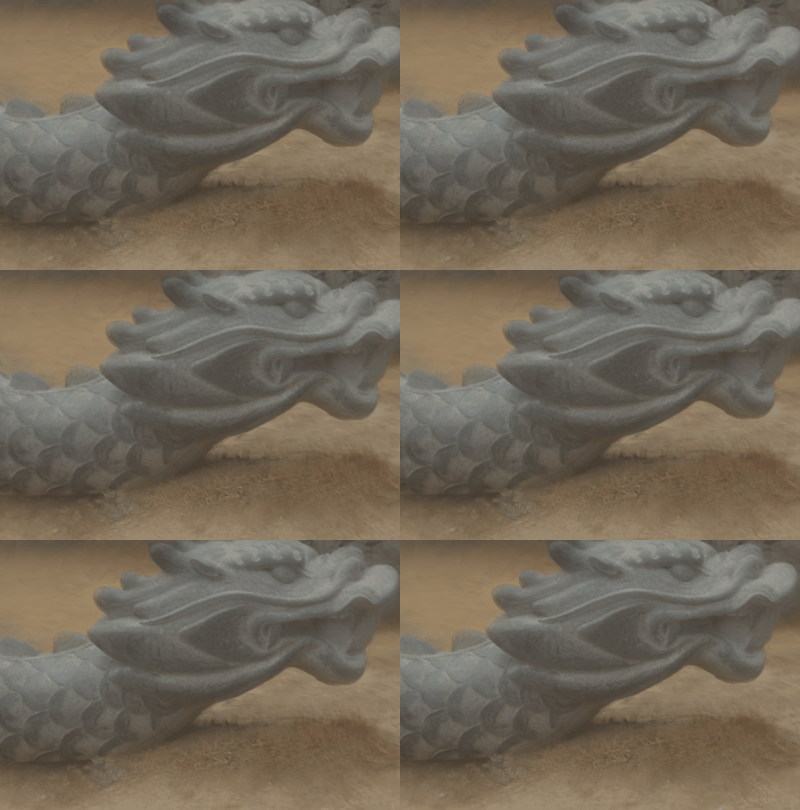
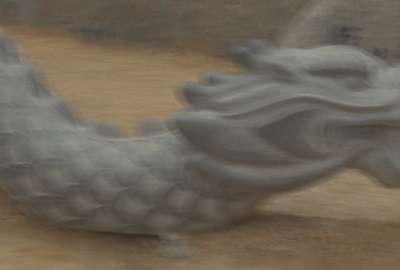
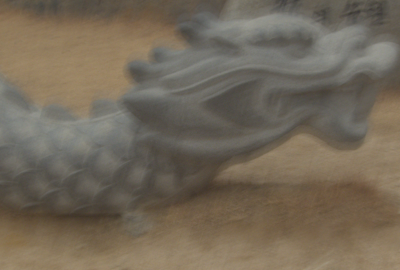
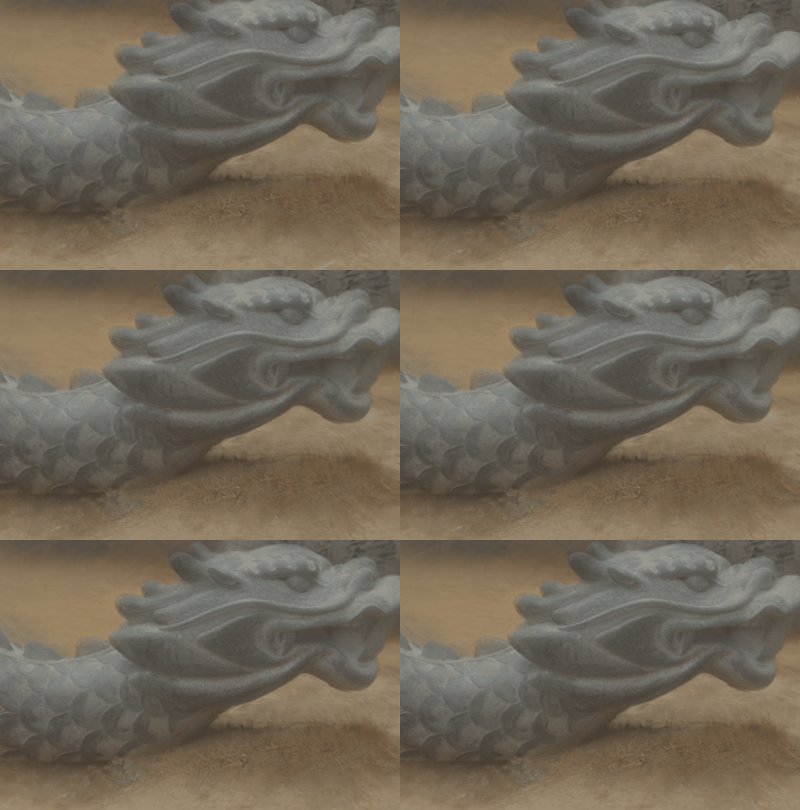
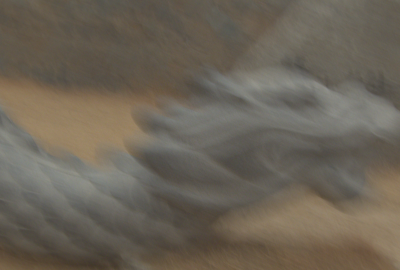
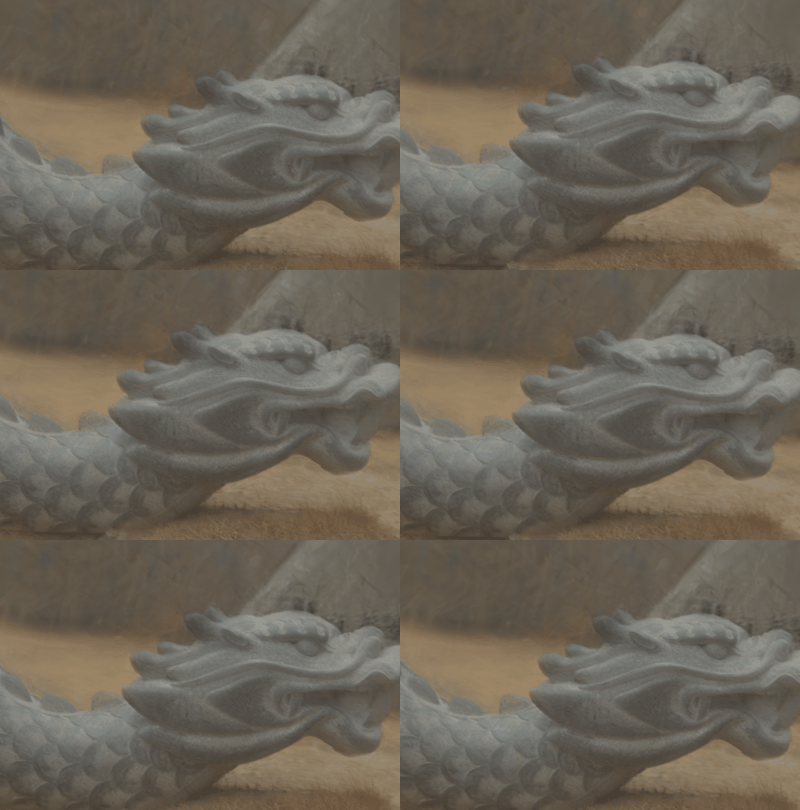
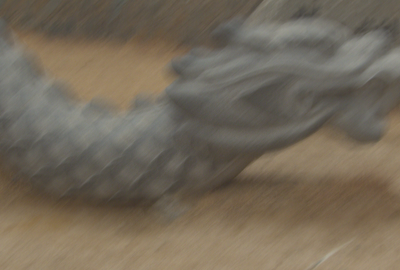
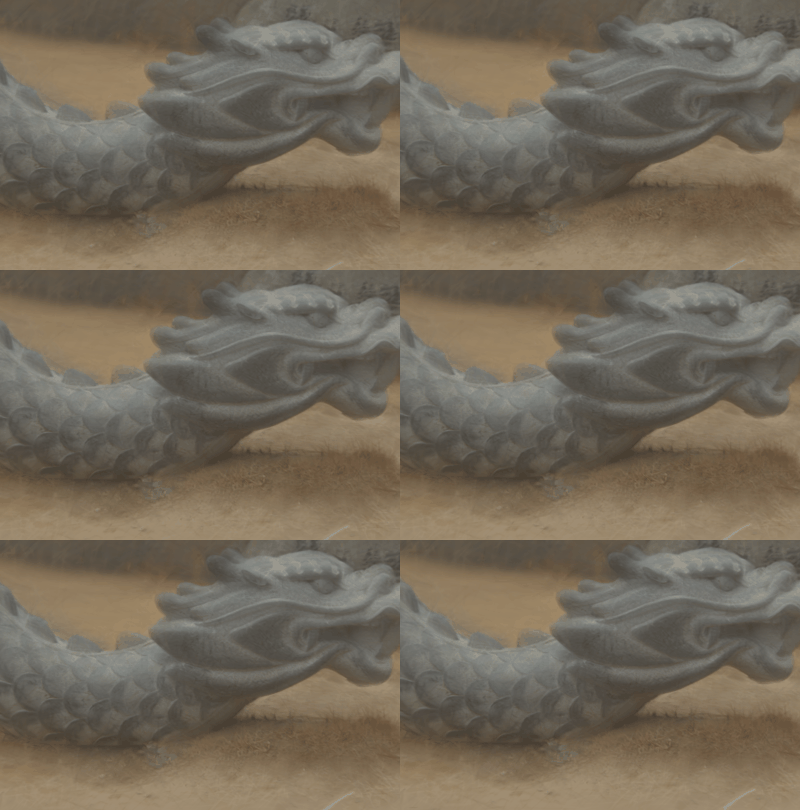
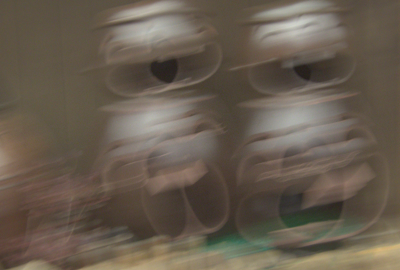
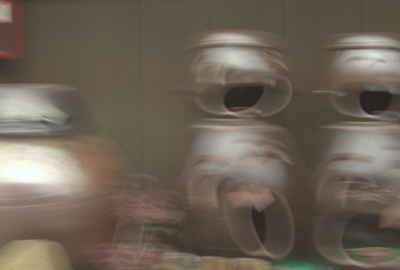
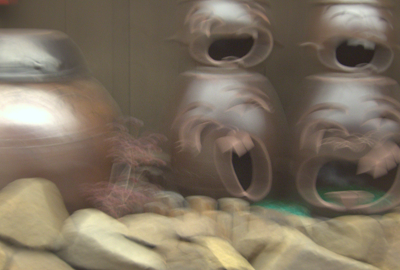
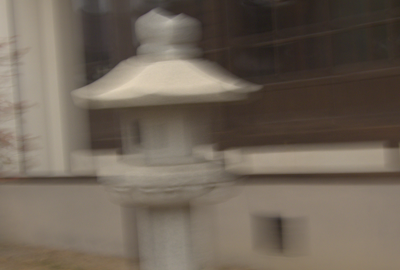
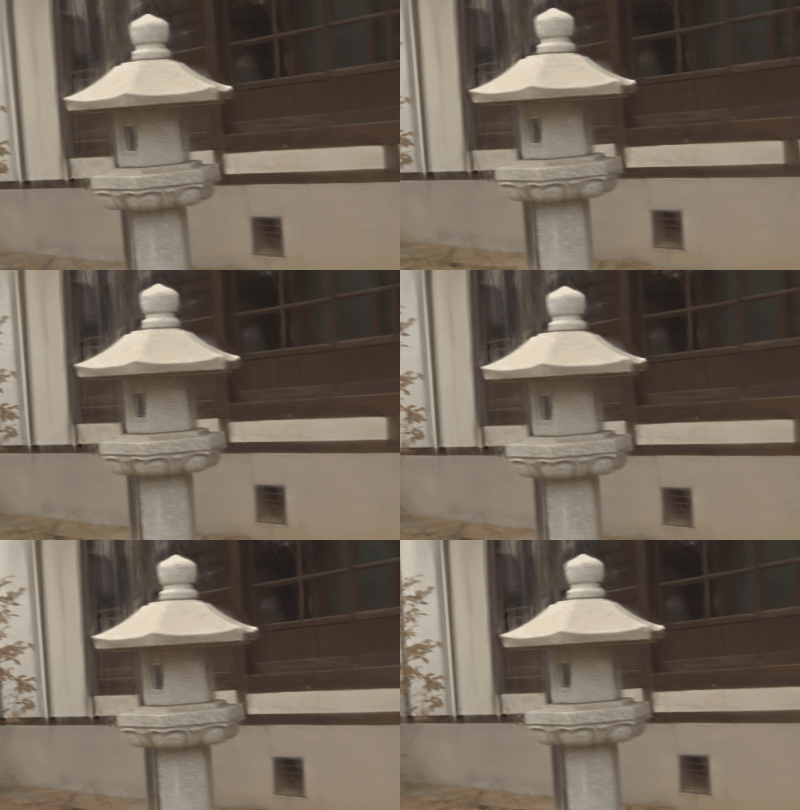
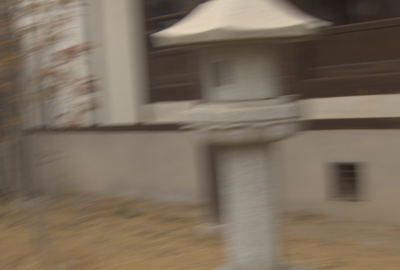
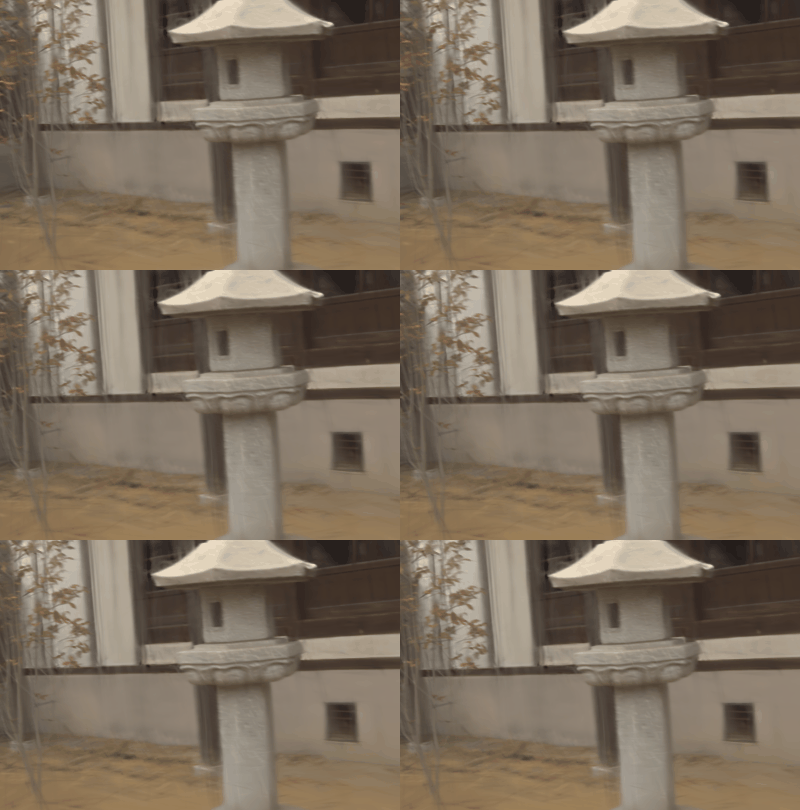
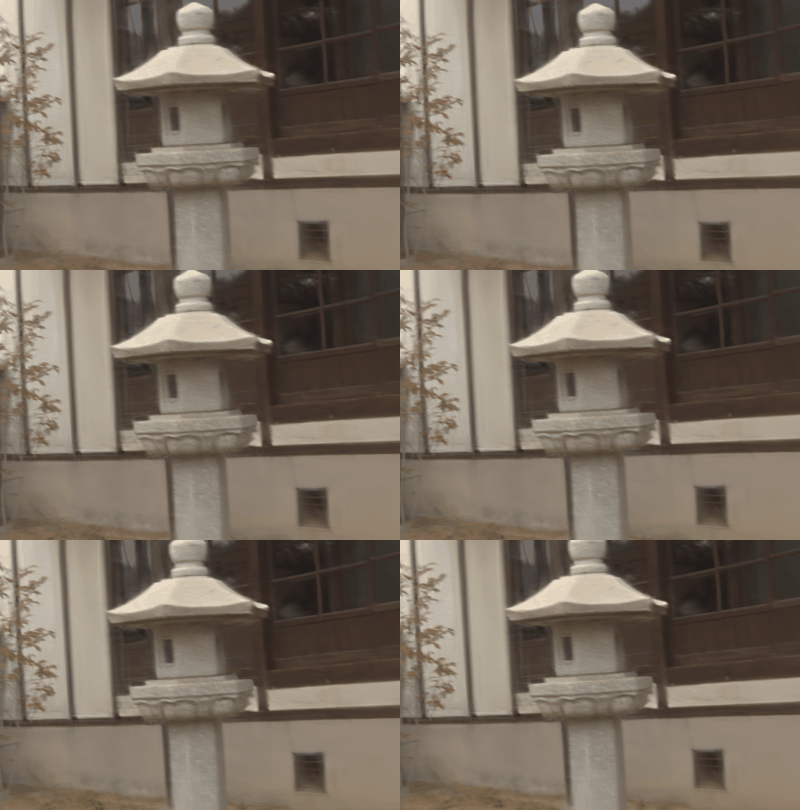
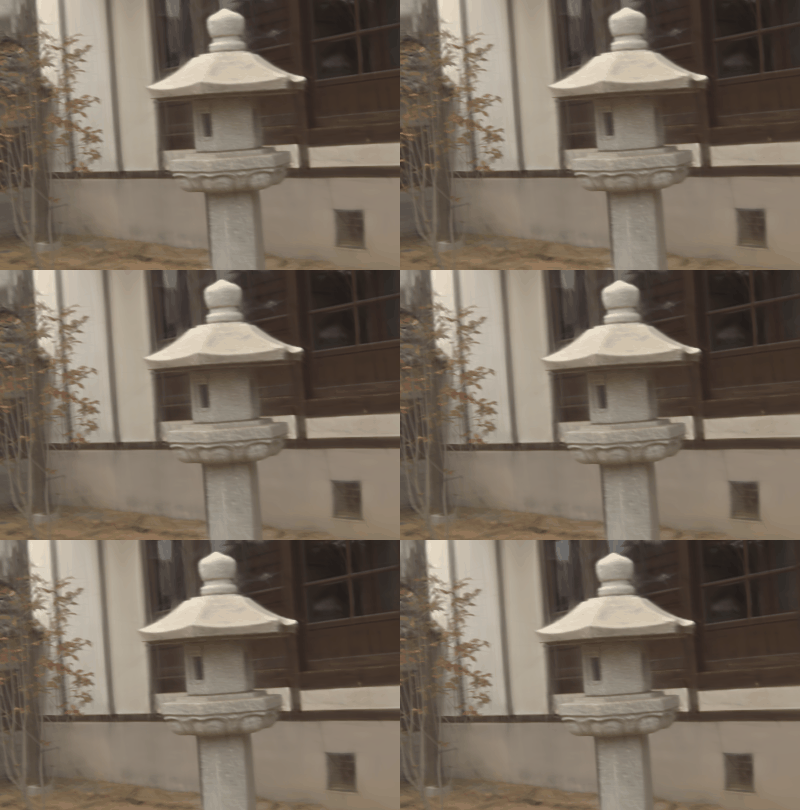
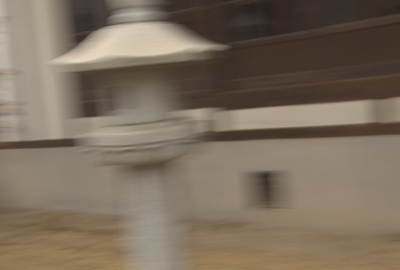
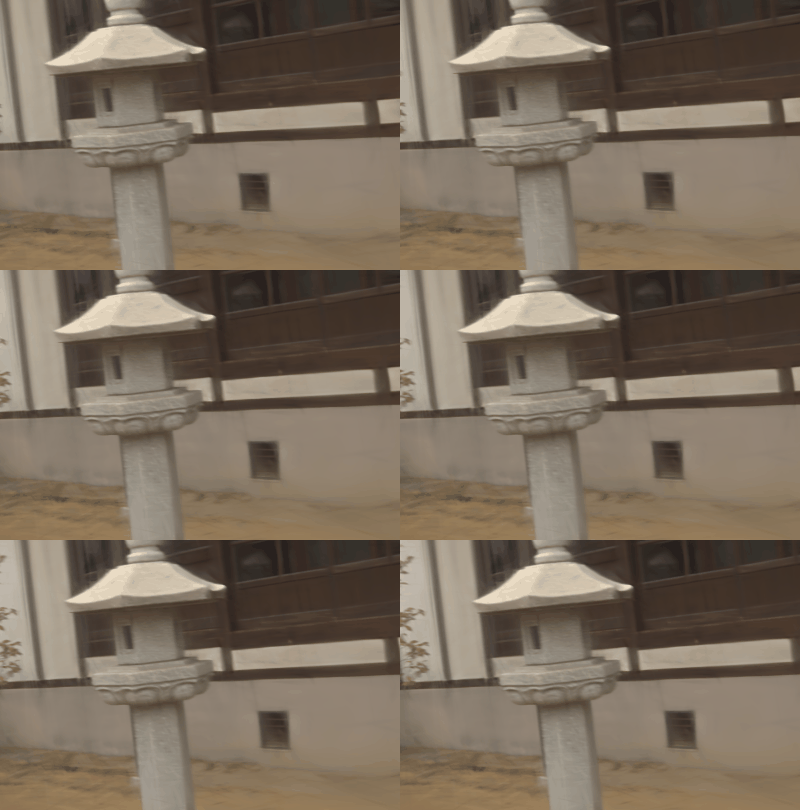
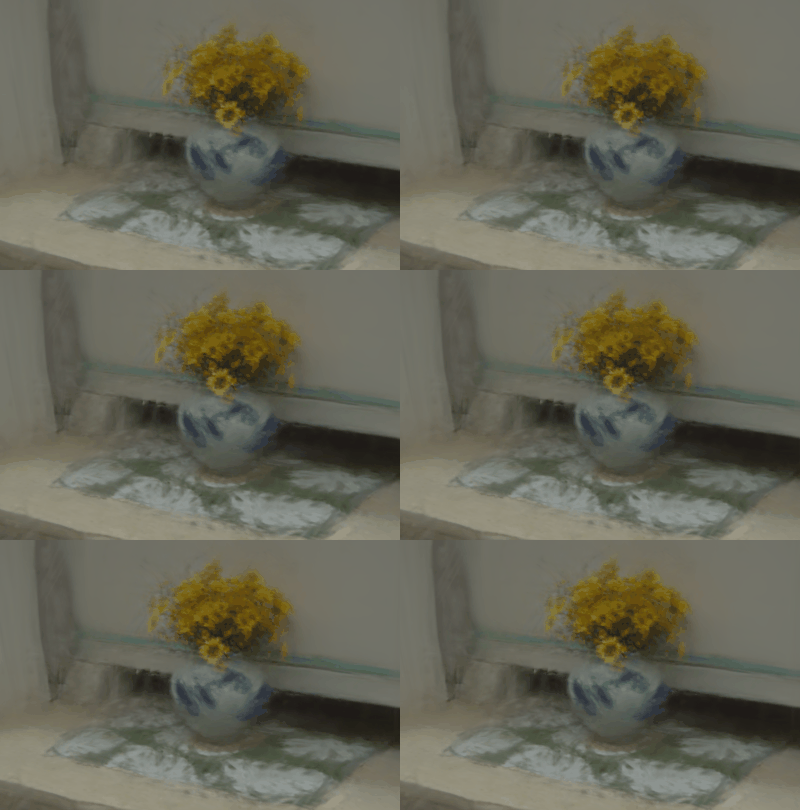
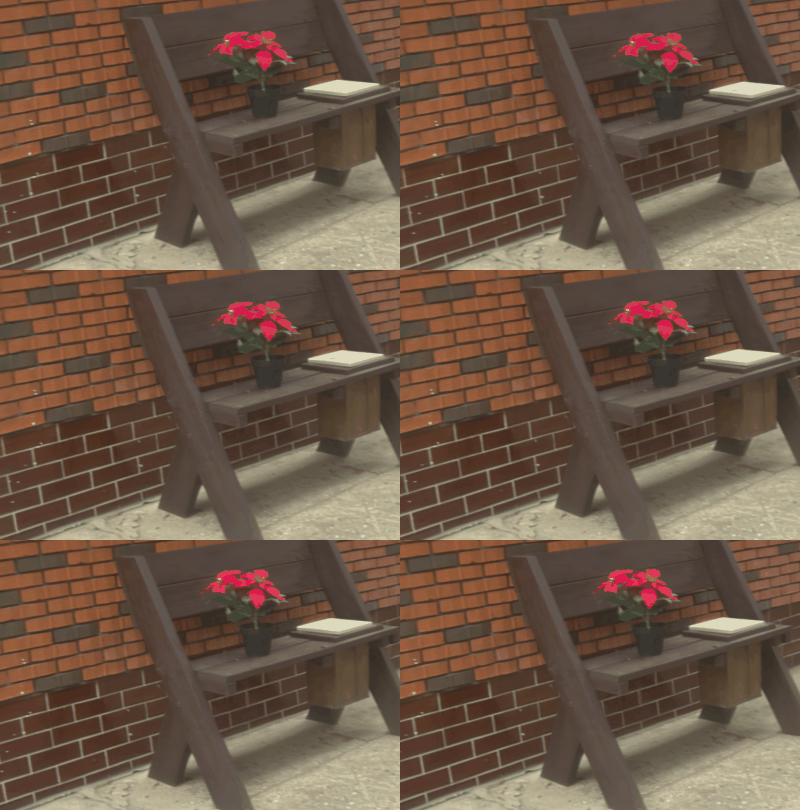
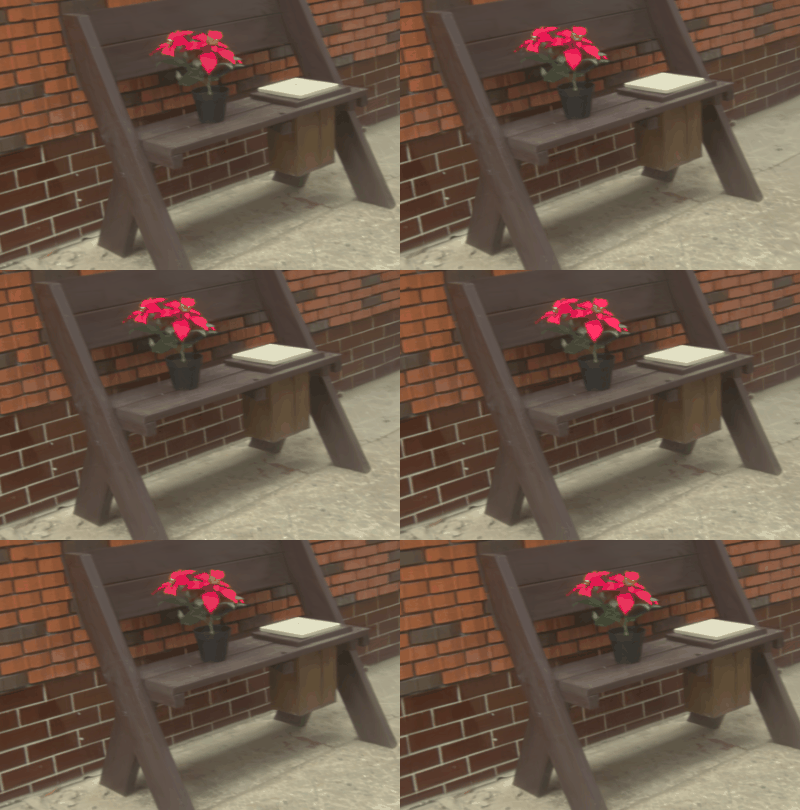
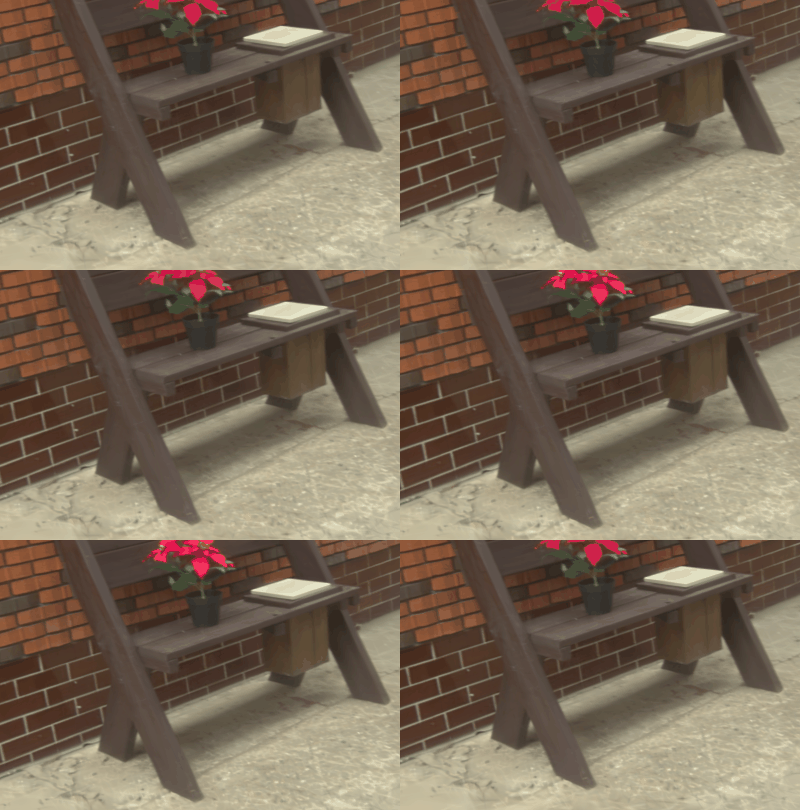
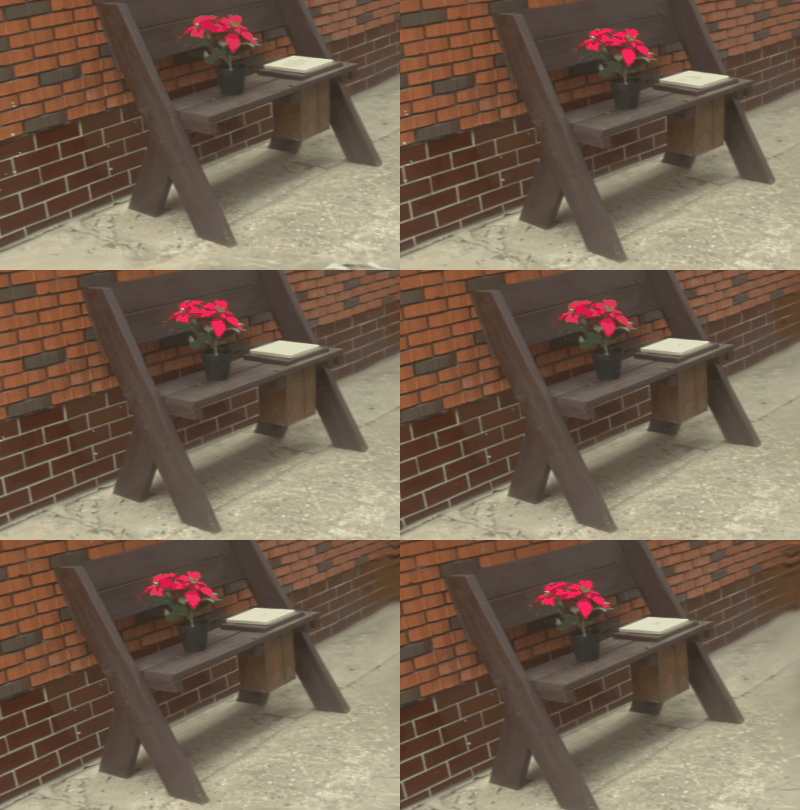
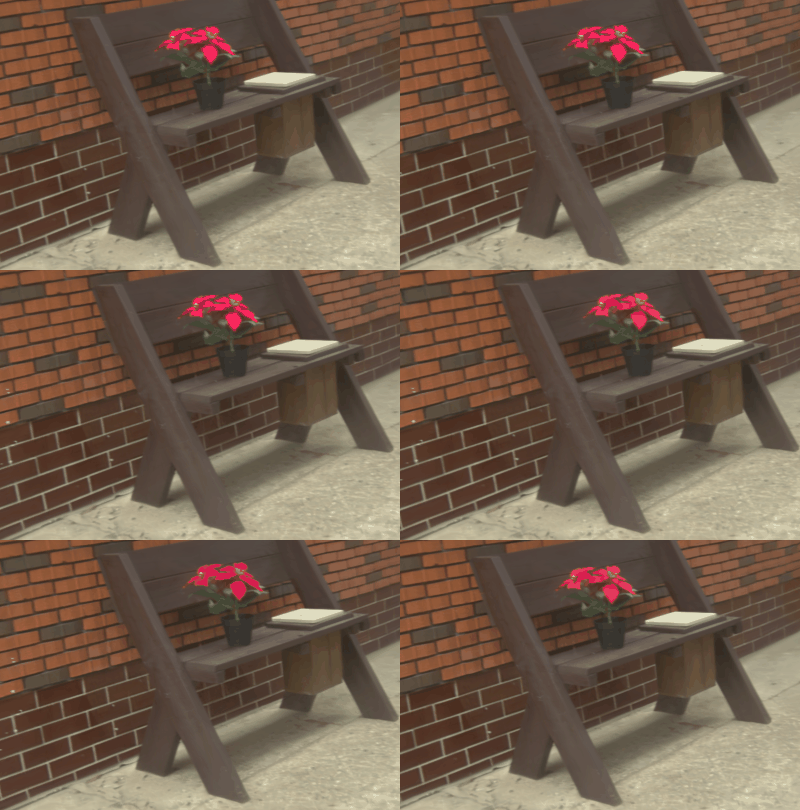
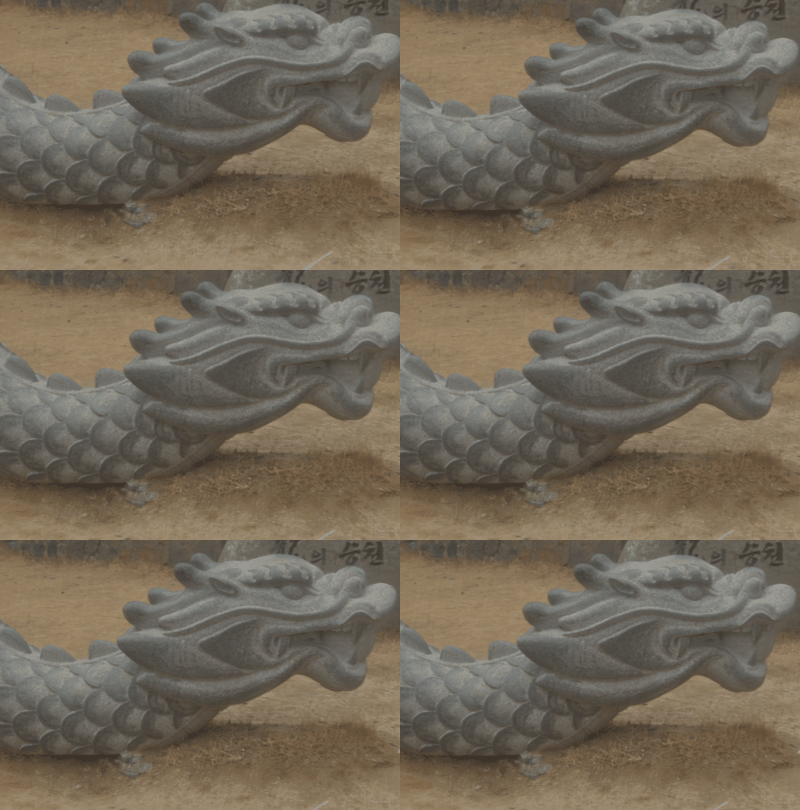
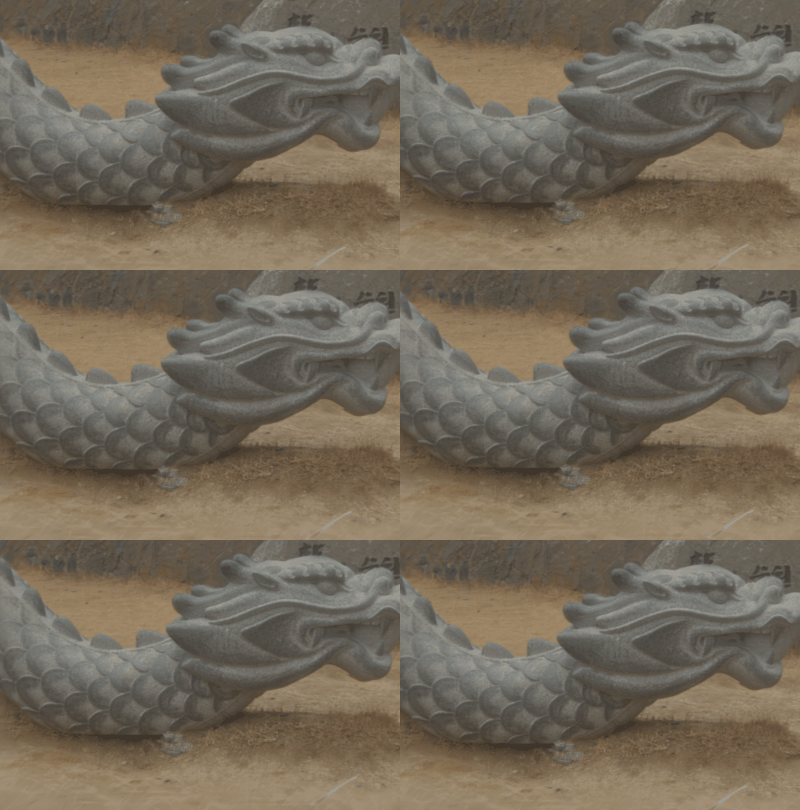
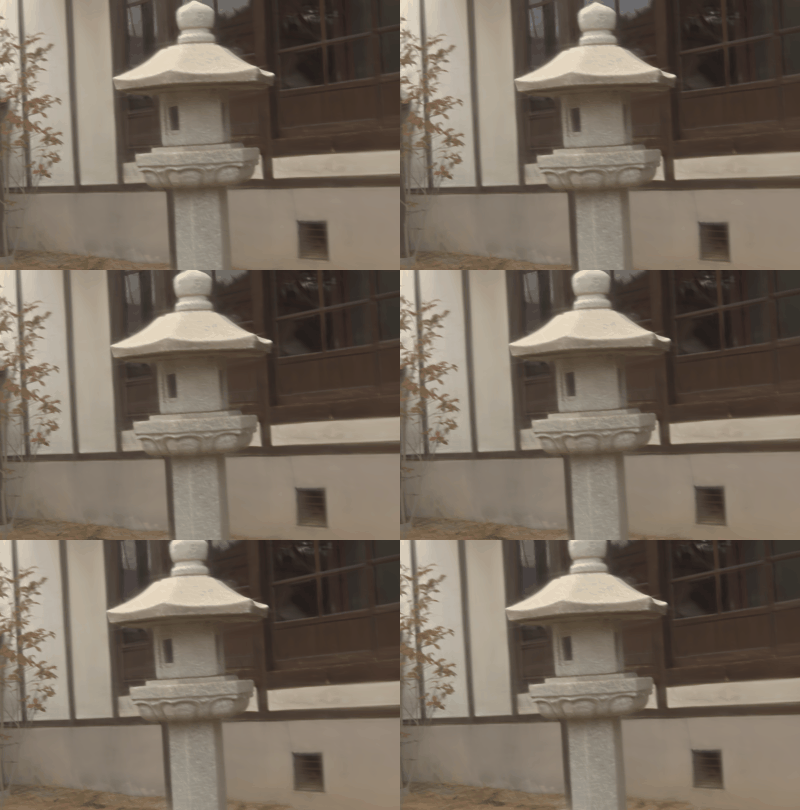
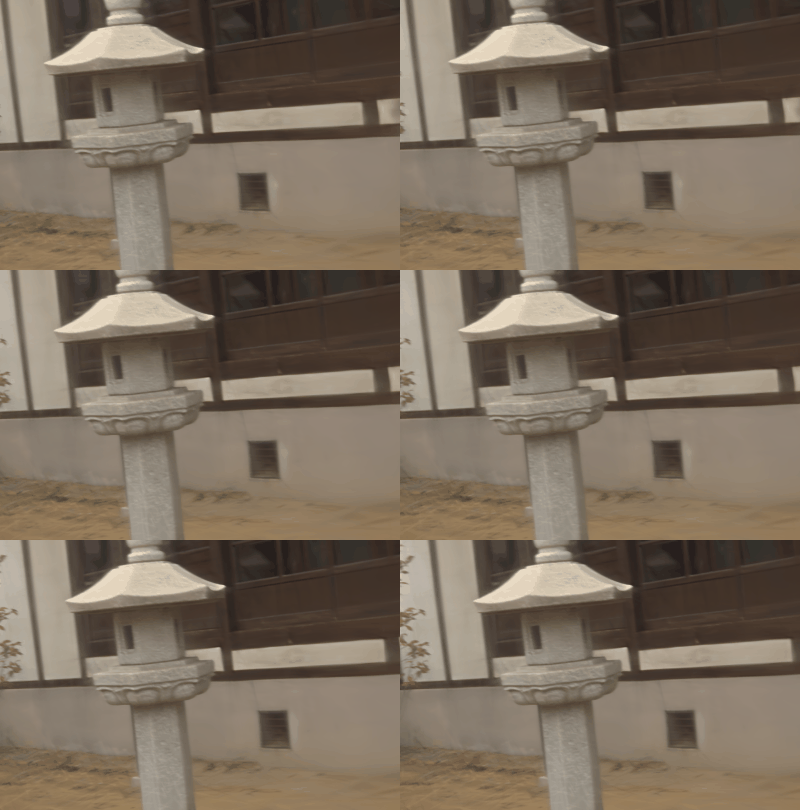
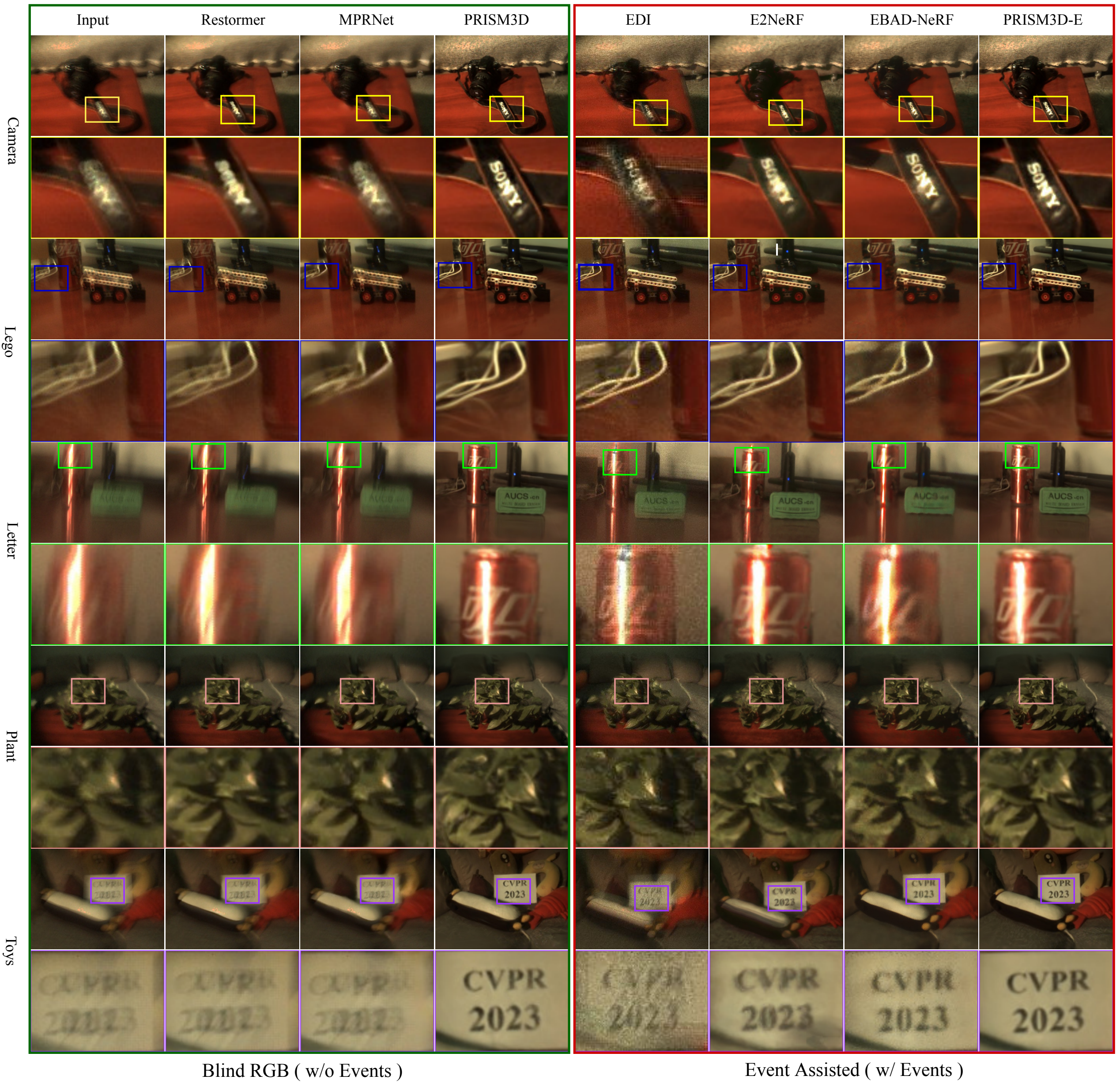
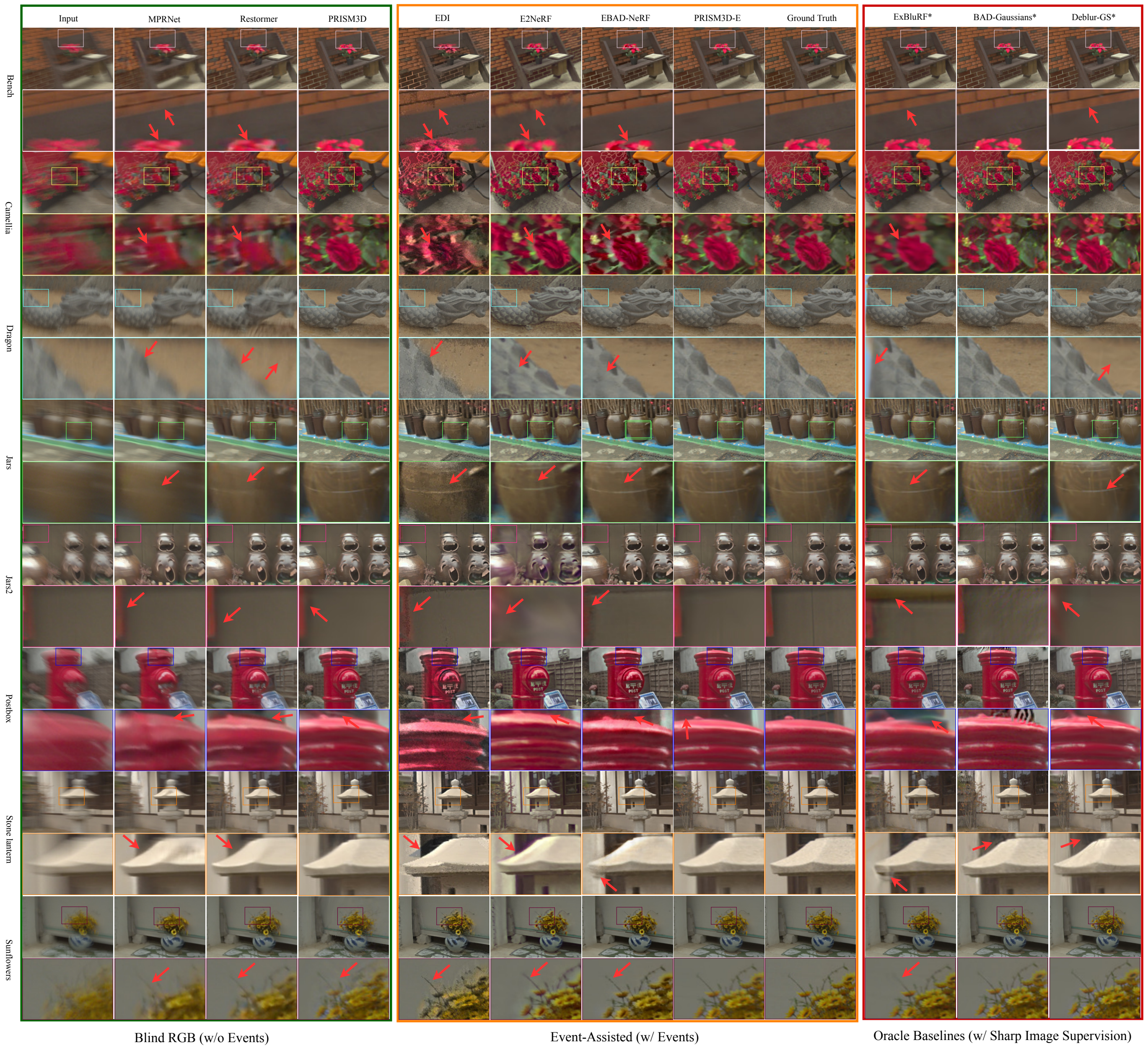
We address the inverse problem of blind 3D scene reconstruction from extremely motion-blurred images, a scenario where traditional Structure-from-Motion pipelines fail. Unlike traditional methods that require sharp images for pose estimation, PRISM3D directly processes blurred images, making it practical for real-world scenarios.
Our approach utilizes a Robust Initialization strategy via deep dense tracking (VGGSfM) to recover global topology where feature matching fails. To robustly populate these sparse priors, we adopt a probabilistic formulation for geometric densification via Markov Chain Monte Carlo (MCMC), while simultaneously modeling physical image formation via continuous Bézier Trajectories.
Furthermore, we introduce PRISM3D-E, a multi-modal (RGB + Events) extension that seamlessly integrates high-temporal-resolution events (EDI deblurring) as structural priors to maximize geometric recovery. To facilitate future research, we concurrently contribute the PRISM3D-E Benchmark dataset specifically curated for extreme blur scenarios.